
A PEB shed is a pre-engineered steel building where structural members are designed in software, fabricated in a controlled plant, and bolted on site, while a conventional shed is usually built with RCC columns, beams, brick walls, and heavier on-site civil work. The main difference is engineering efficiency: PEB uses optimized steel sections and lighter foundations, while conventional systems rely on higher dead load and slower wet construction. In India in 2026, typical PEB shed costs are around ₹1,000 to ₹1,650 per sq ft, while conventional industrial sheds usually land around ₹1,150 to ₹1,900 per sq ft depending on civil scope. PEB projects are commonly 30% to 40% faster, which is why most expansion-focused industries in Delhi NCR prefer PEB for faster commissioning, predictable capex, and easier future expansion.
For factory owners, warehouse developers, and industrial investors in decision mode, the choice between PEB and conventional shed is not only a construction question. It is a business decision tied to speed to market, financing cost, operational continuity, and long-term maintenance burden. The right structure can reduce downtime risk, improve utilization, and protect return on invested capital over 15 to 25 years.
This guide provides a practical, data-backed comparison for Indian industrial projects with a Delhi NCR execution lens. It covers structural differences, cost per sq ft, timeline impact, lifecycle economics, durability, retrofit flexibility, and use-case guidance for warehouses and heavy machinery factories.
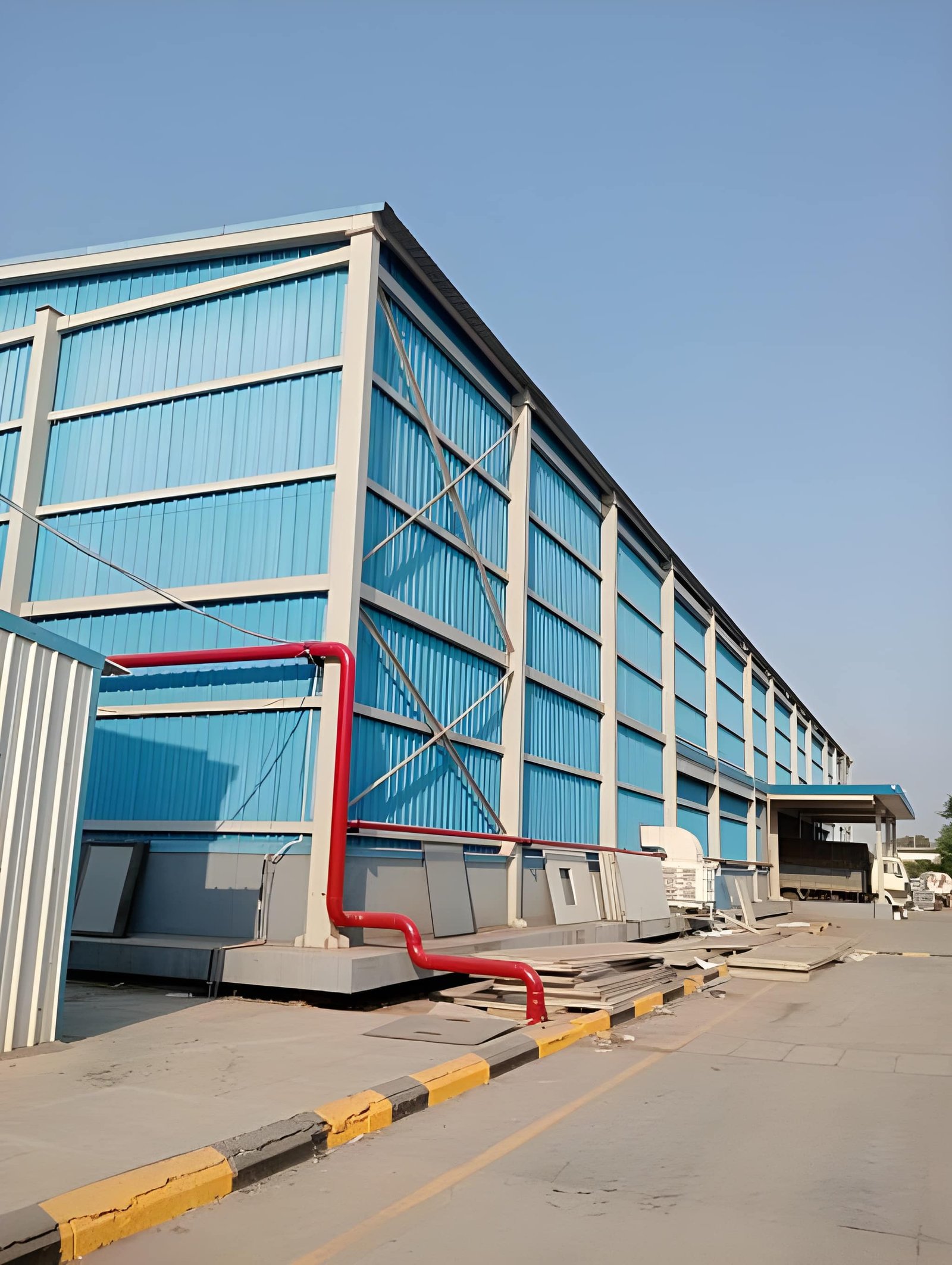
What is a PEB Shed?
A PEB shed, or pre-engineered building shed, is an industrial structure where the primary frame, secondary members, and cladding system are engineered as one integrated system. Instead of designing every beam and plate manually at site stage, the structure is modeled digitally using load combinations for wind, seismic zone, roof live load, crane load, and local code requirements.
The engineering concept is optimization. Tapered built-up members are placed where bending moments are highest, and lighter sections are used where demand is lower. This reduces steel wastage and improves strength-to-weight ratio. Most components are factory-fabricated with controlled welding and quality inspection, then transported for bolted erection. Site work becomes faster and less weather-dependent.
PEB sheds are commonly used for logistics hubs, e-commerce sortation centers, auto component manufacturing units, cold chain nodes, food processing facilities, engineering workshops, and high-span warehouses. In NCR industrial projects, PEB is popular because developers need quick go-live dates, predictable budgets, and future scalability. A planned extension bay can often be added without full demolition, which is important for growing businesses.
- Optimized steel design reduces unnecessary dead load.
- Factory fabrication improves dimensional consistency.
- Bolted erection shortens project schedules.
- Expansion planning is easier than many conventional systems.
What is a Conventional Shed?
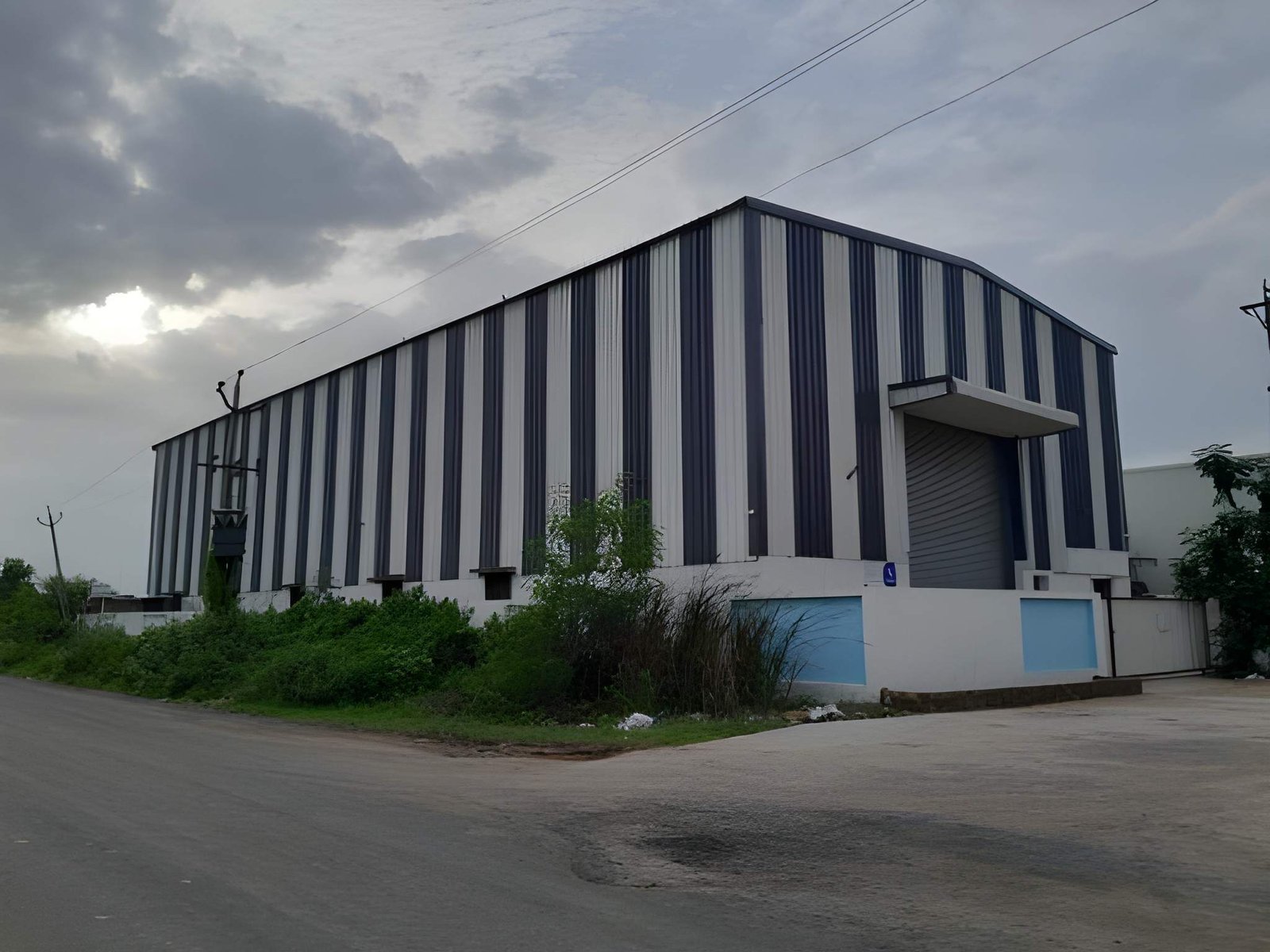
A conventional shed in Indian industrial context generally refers to an RCC-dominant structure with cast-in-situ columns and beams, masonry infill, and roof systems created through trusses, slabs, or mixed structural methods. In many projects, a conventional approach means more site-driven construction and higher dependence on local labor productivity and weather conditions.
The classic brick and column system uses reinforced concrete verticals and horizontals to transfer load to larger foundations. Because the dead load is higher, foundations and civil quantities can increase. Site formwork, reinforcement placement, curing cycles, and repetitive civil sequencing extend project duration when compared with pre-fabricated steel alternatives.
Conventional sheds still have valid use cases. They are selected where owners need heavy masonry integration, specific fire compartmentation preferences, architectural massing requirements, or where legacy project teams are more comfortable with civil-heavy execution. In retrofit-heavy campuses where an existing RCC ecosystem must be matched, conventional extension can also be considered.
Core Structural Differences
The first structural difference is steel optimization. PEB systems are engineered around variable demand. Member depth and plate thickness can change along the element length. Conventional systems frequently use more uniform member geometries, which can be simpler to detail but less material-efficient for long spans.
The second difference is load distribution logic. PEB primary frames and bracing systems are designed as an integrated lateral load path, which can support large clear spans with fewer internal obstructions. Conventional layouts often involve denser column grids or heavier members, which can affect circulation, rack planning, and process line flexibility in factories and warehouses.
The third difference is foundation behavior. Because PEB dead load is generally lower, foundation volumes are often reduced compared with heavier RCC-based options, subject to soil and uplift conditions. In industrial budgeting, this shift matters because foundation and plinth costs are usually among top capex drivers after structure and envelope.
- Material efficiency: PEB usually provides better strength-to-weight performance.
- Span utility: PEB supports long clear spans for warehousing and movement efficiency.
- Foundation demand: Lower structural dead load often translates to lower civil quantities.
- Execution interface: PEB compresses design, fabrication, and erection coordination.
Detailed Feature Comparison
| Feature | PEB Shed | Conventional Shed |
|---|---|---|
| Cost per Sq Ft | Typically ₹1,000 to ₹1,650 in 2026 for most industrial specs | Typically ₹1,150 to ₹1,900, depending on civil intensity and finish |
| Construction Time | Faster by about 30% to 40% due to off-site fabrication and rapid erection | Slower due to on-site RCC cycles, curing, and sequential civil workflows |
| Structural Weight | Lighter optimized system with better steel utilization per functional span | Heavier dead load with larger civil and structural mass in many cases |
| Foundation Requirement | Generally lower foundation volume, subject to soil and uplift checks | Often higher foundation and plinth requirements due to dead load |
| Scalability | Expansion-friendly with planned extension bays and modular detailing | Expansion can be slower and more disruptive in civil-heavy layouts |
| Maintenance | Lower routine maintenance with proper coatings and detailing | Potentially higher repair frequency across civil and finish elements |
| Lifecycle Cost | Usually lower total ownership cost due to speed and operating efficiency | Can be higher over full lifecycle because of time and maintenance overhead |
PEB vs Conventional Shed Cost Comparison in 2026
For decision-stage planning, cost must be analyzed in four layers: initial capex per sq ft, regional execution variance, schedule-linked financing impact, and lifecycle opex. Looking only at headline per sq ft can create wrong decisions for industrial projects.
India 2026 indicative ranges
- PEB shed cost per sq ft India: around ₹1,000 to ₹1,650 for common industrial use cases.
- Conventional shed cost per sq ft India: around ₹1,150 to ₹1,900 depending on civil method and finishes.
- High-spec projects: both systems can go higher when crane loads, fire norms, process utilities, and thermal envelope standards increase.
Delhi NCR variation
In Delhi NCR, practical rates are shaped by labor availability, steel logistics, statutory compliance pace, and schedule pressure from tenant commitments. PEB tends to provide better cost predictability in NCR because fabrication is front-loaded and site uncertainty is lower than purely wet construction models.
10,000 sq ft example
Scenario A: PEB shed at ₹1,250 per sq ft
Base capex = 10,000 × ₹1,250 = ₹1,25,00,000
Scenario B: Conventional shed at ₹1,450 per sq ft
Base capex = 10,000 × ₹1,450 = ₹1,45,00,000
Initial capex difference
₹20,00,000 in this representative case, before considering schedule-linked financing and operating delay costs.
Lifecycle cost perspective
- Faster commissioning can unlock earlier production or lease revenue.
- Reduced maintenance interruptions improve uptime value.
- Expansion flexibility lowers future modification cost.
- Predictable project execution lowers rework and claim risk.
For most industrial buyers, lifecycle economics usually reinforce PEB advantage unless a highly specific conventional requirement exists.
Construction Time Comparison
PEB is commonly 30% to 40% faster because key structural activities move from site to factory. Engineering finalization, CNC cutting, welding, drilling, and paint systems happen in parallel with foundation work. Once anchor bolts and base levels are ready, erection progresses rapidly through bolted assembly.
Conventional systems rely on repeated on-site sequencing, including shuttering, reinforcement, pouring, curing, de-shuttering, and masonry integration. This process is sensitive to labor consistency, weather interruptions, and rework from coordination gaps.
Faster execution has direct business implications. If a plant starts operations earlier, the project can generate cash flow sooner. If a warehouse activates before peak demand cycle, occupancy and throughput gains improve annual returns. Even a 2 to 4 month acceleration can materially affect project IRR for industrial investors.
- Operational impact: earlier commissioning means faster production ramp-up.
- Financial impact: lower interest during construction and earlier revenue capture.
- Strategic impact: better response to market demand and expansion windows.
Durability and Maintenance Comparison
Durability is not only about material type. It depends on engineering quality, detailing, coatings, drainage, and inspection discipline. Well-designed PEB sheds with proper anti-corrosion systems can deliver long service life with predictable maintenance cycles. High-performance coating systems and planned inspection intervals are critical in humid or pollutant-heavy industrial zones.
Conventional sheds can also be durable, but maintenance burden can increase due to cracks, seepage pathways, and mixed-material interfaces over time. Repair programs may require localized civil intervention, which can affect operations in active industrial facilities.
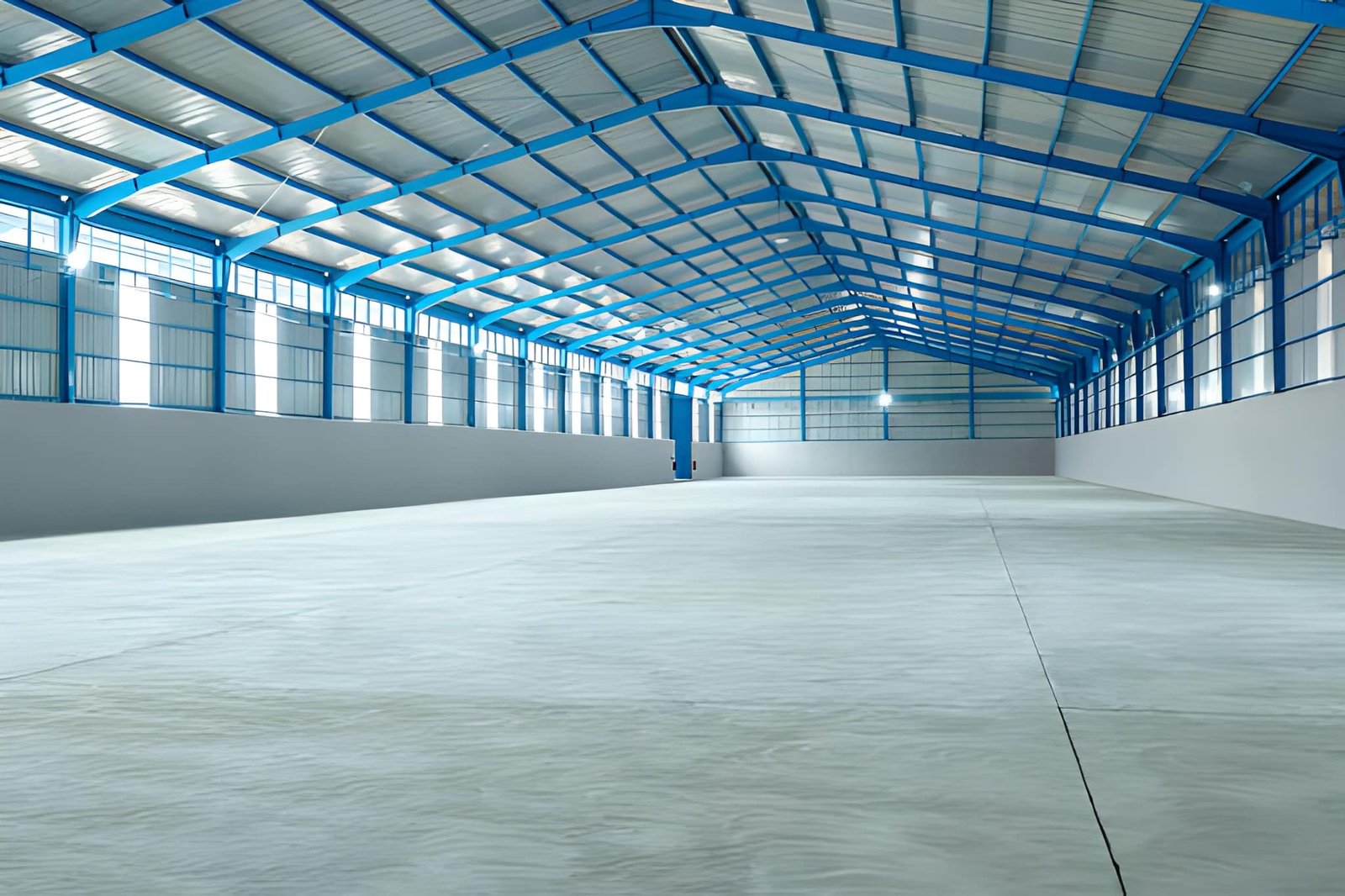
Long-span capability is another practical differentiator. PEB typically handles larger unobstructed spans more efficiently, which is beneficial for storage planning, vehicle movement, and process line changes. Retrofitting flexibility is generally stronger in PEB, especially when expansion joints and future bays are planned at design stage.
- Corrosion: manageable in PEB through coating specification and inspection schedules.
- Span utility: PEB offers strong advantage in long clear spans.
- Retrofit: PEB generally supports cleaner future modifications.
- Repair cost: lower disruption potential in many steel-optimized layouts.
Which Shed is Better for Warehouses?
For most warehouses, PEB is the better option because warehousing performance depends on clear span, height efficiency, expansion readiness, and fast delivery. Modern warehousing in North India increasingly requires high-volume movement, flexible racking plans, and quick go-live deadlines. PEB aligns strongly with these needs.
Decision checklist for warehouses:
- Do you need long clear spans with minimal internal obstructions?
- Is speed to operation critical for lease or logistics contracts?
- Will the facility likely expand within 3 to 5 years?
- Do you need predictable capex for investor approval?
If the answer is yes to most of the above, PEB is usually the practical warehouse choice in 2026.
Which Shed is Better for Factories with Heavy Machinery?
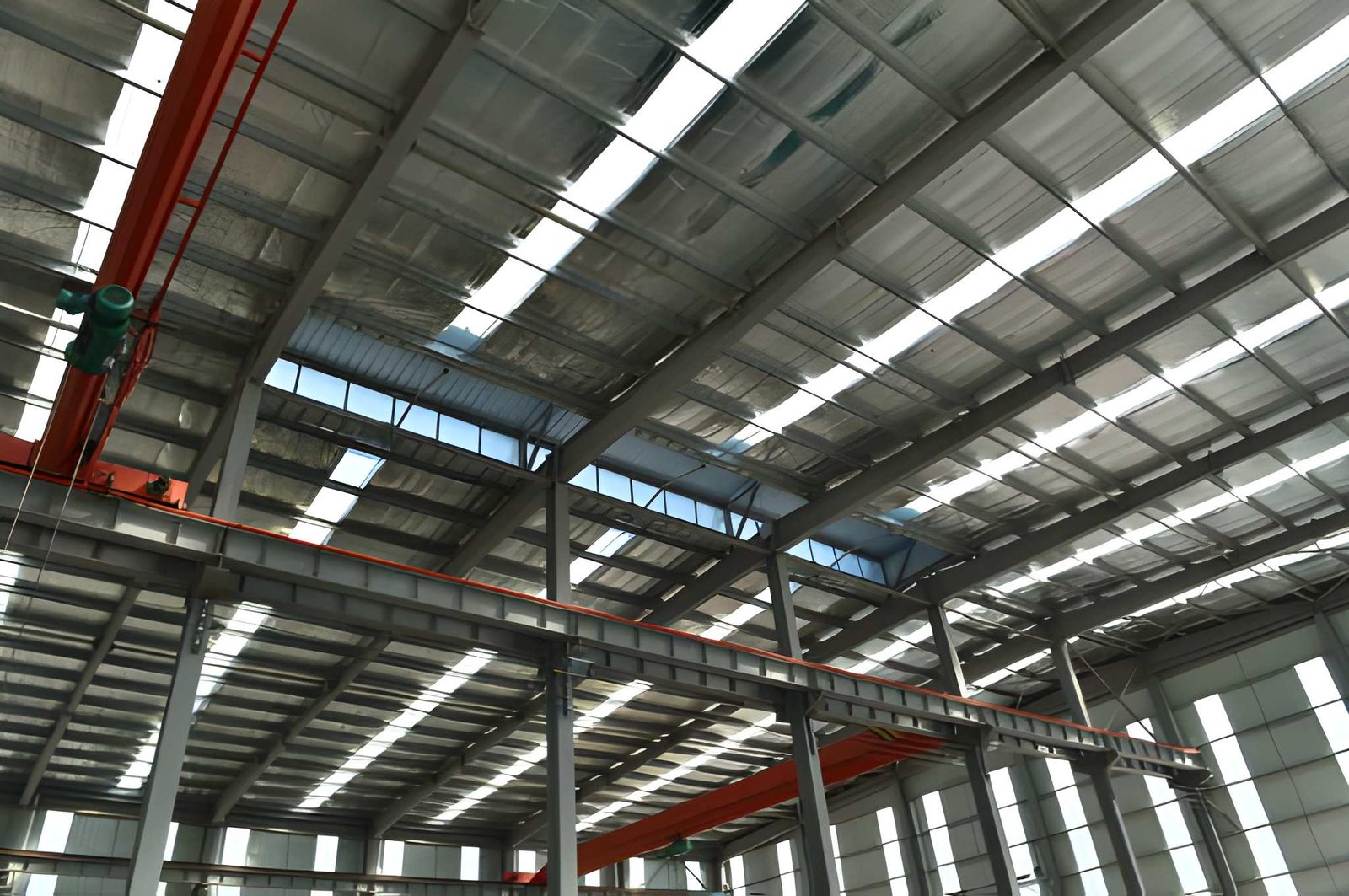
Factories with heavy machinery require a load-focused engineering decision rather than a generic material preference. PEB can support heavy industrial use when the frame, crane systems, mezzanine load, vibration behavior, and foundation interface are properly designed. The assumption that steel structures cannot handle heavy-duty manufacturing is incorrect when engineering is done correctly.
Choose based on these factors:
- Crane tonnage and runway beam requirements
- Dynamic equipment load and vibration isolation strategy
- Future machine relocation and process line flexibility
- Required clear heights and bay spacing for operations
For many heavy machinery environments, a hybrid strategy is used: PEB primary shell with machine-specific RCC foundations and local civil reinforcement where needed. This gives speed plus performance.
When Should You Choose a Conventional Shed?
Conventional sheds remain relevant in specific conditions. If a project requires extensive masonry integration, unique architectural civil form, or strict alignment with an existing RCC campus standard, conventional design may still be practical. Some owners also choose conventional systems due to internal procurement familiarity and local execution comfort.
Conventional can be considered when:
- There is a mandatory RCC structural continuity requirement.
- The site has established civil contractors but limited steel execution support.
- Program urgency is low and schedule premium is not a major concern.
- Project function strongly favors dense civil compartmentation.
Even in these cases, a comparative techno-commercial study should be done before locking the structure type.
Why Most Industrial Projects in Delhi NCR Prefer PEB in 2026
In 2026, industrial developers in Delhi NCR are prioritizing predictable outcomes over theoretical design preference. PEB adoption is rising because it addresses the four execution pressures that most projects face: timeline certainty, budget control, expansion readiness, and functional efficiency.
- Speed: pre-fabrication compresses project schedule and supports earlier business activation.
- Cost predictability: front-loaded engineering and fabrication reduce site volatility.
- Expansion flexibility: modular bay planning supports phased growth without full rebuild.
- Steel engineering advancements: better analysis software, detailing standards, and fabrication controls improve reliability.
For investors and operators in NCR, these factors directly improve capex efficiency and operating resilience. That is why PEB is now the default evaluation baseline for most industrial greenfield and expansion projects.
FAQs
Is PEB cheaper than conventional shed?
In many 2026 industrial projects, yes. PEB often delivers lower effective project cost because structural steel is optimized, foundation demand is reduced, and commissioning is faster. Conventional sheds can still be viable, but they commonly involve higher time-related costs and more site variability, especially in schedule-sensitive NCR projects.
Which shed lasts longer?
Both can last long when properly engineered and maintained. In practical industrial operation, lifespan depends on detailing quality, coatings, drainage, inspection routines, and repair discipline. PEB with correct corrosion protection performs reliably for decades, while conventional systems need disciplined crack and seepage management for consistent long-term performance.
Can PEB handle heavy cranes?
Yes. PEB sheds can be designed for heavy crane loads through proper frame sizing, runway beam detailing, bracing systems, and foundation coordination. The key is not the label PEB versus conventional, but whether the structural design is based on accurate load data, dynamic behavior, and future operating conditions.
Is RCC shed stronger than steel?
Strength depends on engineering, not just material category. RCC can provide excellent performance in specific configurations, and steel PEB systems can also deliver high strength with lower dead load. For industrial projects, the right question is whether the selected system safely meets load, span, durability, and lifecycle objectives at optimal cost.
What is the cost difference per sq ft?
In 2026, representative Indian ranges often show PEB around ₹1,000 to ₹1,650 per sq ft and conventional around ₹1,150 to ₹1,900 per sq ft. Actual differences depend on load class, envelope, utility scope, and region. In Delhi NCR, schedule pressure and execution complexity make optimized PEB economics more attractive in many cases.
Which shed is better for warehouse?
For most warehouse projects, PEB is the stronger choice because it supports long clear spans, faster build cycles, and easier future expansion. These benefits improve storage efficiency and speed to occupancy. Conventional systems can work, but they are generally less flexible for modern logistics layouts and phased capacity growth models.
Can PEB be expanded later?
Yes, expansion is one of the major advantages of PEB when planned from design stage. Additional bays, extension frames, and envelope continuity can be integrated with lower disruption than many civil-heavy alternatives. Expansion feasibility still requires structural and foundation checks, but the process is usually more execution-friendly.
Which is better for Delhi NCR climate?
Both systems can perform in Delhi NCR climate with correct design and maintenance, but PEB often offers better practical outcomes due to faster installation and improved envelope options. With proper insulation, ventilation, and corrosion protection, PEB delivers reliable thermal and structural performance for warehouses and factories in NCR conditions.
Get the Right Shed Type for Your Project, Not a Generic Quote
VYOMN Projeccts is a shed-first industrial construction specialist with 15+ years of Delhi NCR execution experience. We help factory owners and warehouse developers choose the right structural system using real load data, lifecycle costing, and project timeline priorities.
Explore shed services | View industrial projects | Request a project consultation