
Industrial Shed Design Guidelines: The India Compliance Guide
Design Beyond Decency
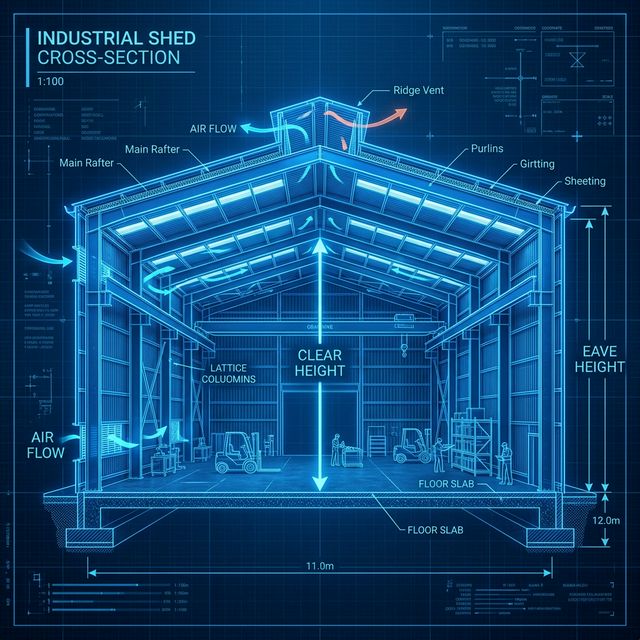
Designing an industrial shed in India is not just about choosing a length and width. It is a complex balancing act between functional efficiency, safety regulations (NBC 2016), and the harsh environmental reality of the Indian subcontinent—from the high winds of coastal Gujarat to the seismic zones of NCR.
In this guide, we break down the critical design guidelines that every owner and developer should understand before the first steel column is cast.
1. Height Rules: Clear vs. Eave
The "Height" of your shed determines your storage volume and your ventilation capacity. There are two primary markers:
- Eave Height: The height from the floor to the point where the roof starts. This is usually what contractors quote.
- Clear Height: The measurement from the floor to the *lowest* point of the roof rafter. This is the actual usable height for your racks or machinery.
Indian Standard: For modern logistics, a minimum eave height of 10-12 meters is becoming the norm to support 5-level racking systems.
2. Structural Loading: The IS Codes
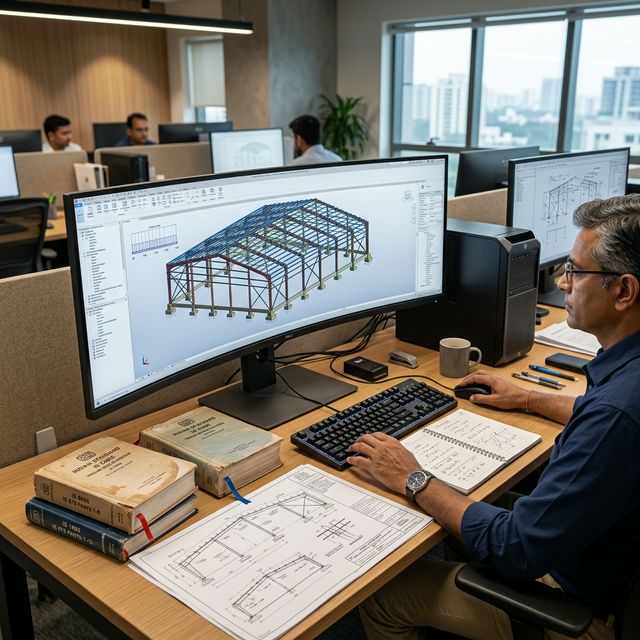
Your building must be engineered to resist specific forces. In Indian engineering practice, we rely strictly on the **BIS (Bureau of Indian Standards)**:
- IS 875 (Part 1 & 2): Covers Dead and Live loads (the weight of the building and the stuff inside).
- IS 875 (Part 3): Critical Wind Load analysis. Most failures in India happen because of "suction" forces during storms that lift roofs off.
- IS 1893: Seismic design criteria. Essential for projects in North India and earthquake-prone coastlines.
3. Ventilation and Lighting
A poorly designed shed feels like a furnace in the Indian summer. Standards recommend at least **6 to 10 air changes per hour** (ACH) for general warehouses.
- Natural Ventilation: Use continuous ridge ventilators at the roof peak and louvers at the bottom for "stack effect" cooling.
- Daylighting: At least 3-5% of your roof area should be translucent polycarbonate skylight panels to eliminate daytime lighting costs.
4. Safety and Fire Guidelines

Fire NOC (No Objection Certificate) is now non-negotiable for industrial sheds. Design guidelines include:
- Egress Routes: Maximum travel distance of 30-45 meters from any point to an exit.
- Fire Walls: Dividing large sheds (>50,000 sq ft) into fire compartments using 2-hour rated firewalls.
- Sprinkler Clearance: Structural rafters must allow for sprinkler piping without obstructing storage height.
Build with Precision
Design is where you save or lose 20% of your total project value. At **Vyomn Projeccts**, our design team works strictly in compliance with BIS codes while optimizing for material efficiency. Don't leave your structural safety to guesswork.
Request a Design Audit